.svg?v=133333626955077491221771076156)


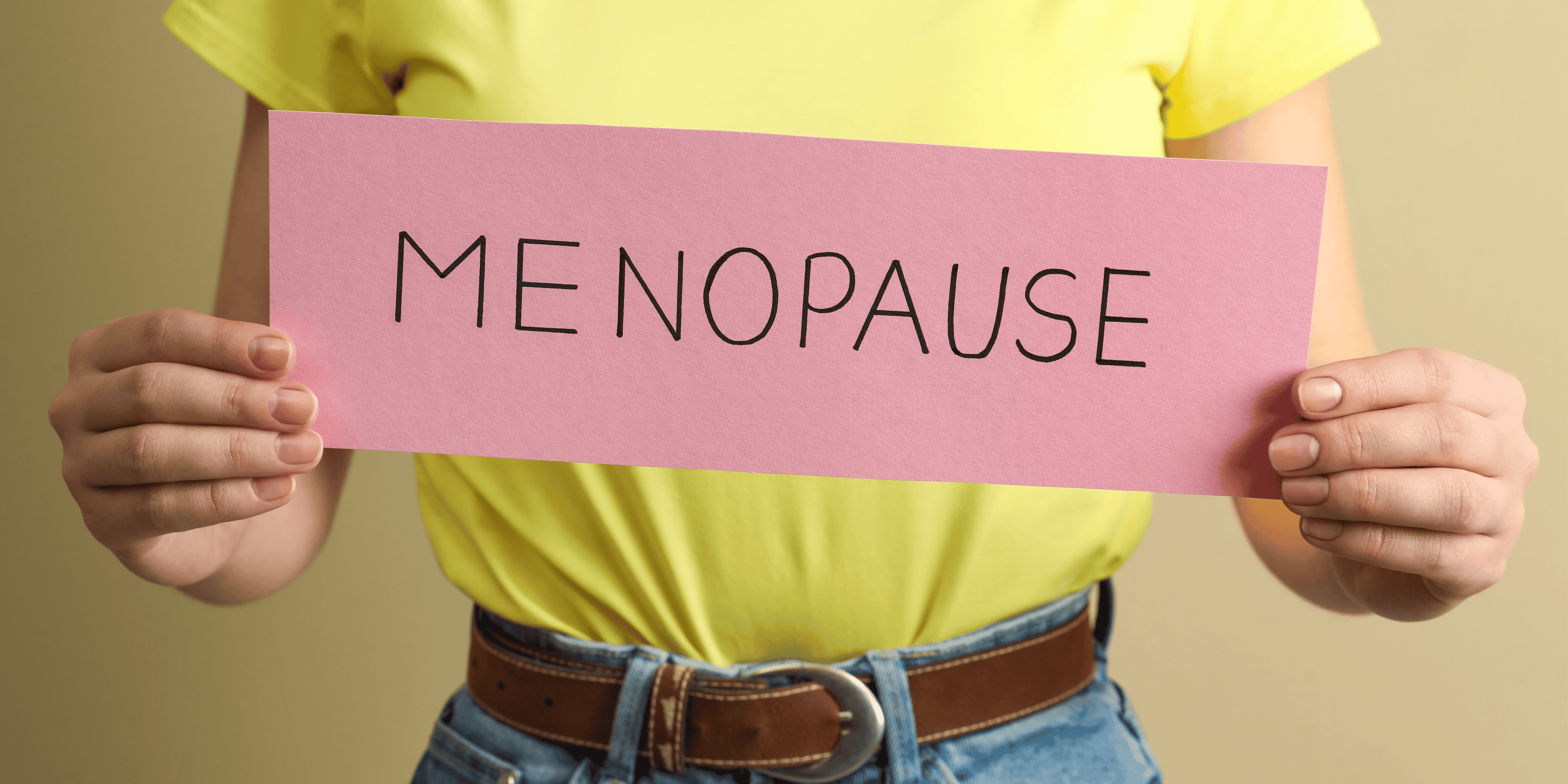
For women, the period around menopause is often no picnic. It varies from woman to woman, but many of us experience unpleasant symptoms. Common discomforts include: poor sleep, hot flashes, vaginal dryness, irritability, suddenly feeling down, a disappearing waistline, and hair that becomes dull and thinning. In this blog, I will give you more information about what menopause is, at what age it occurs, and what you can do to prevent as many discomforts as possible.
What is the meaning of menopause?
Menopause refers to the moment when you had your last period. You often don't know for sure until after a year, because your periods become irregular during the transitional years.
The transition therefore refers to the years surrounding the last menstruation. The term menopause itself specifically refers to that last menstruation.
At what age does menopause occur? And does your menstruation therefore stop?
Usually, your period stops around the age of 50 or 55. Your eggs run out and you enter menopause. But before that time, you have already been in premenopause for quite a few years. Why is this?
This is because there is already a decline in the production of the hormones that regulate your monthly cycle around the age of 35 or 40. This starts with progesterone, followed by estrogen. That is why you may experience the first, still mild, discomforts around the age of 40. Over the years, the symptoms of approaching menopause increase.
Can you prevent symptoms of (pre)menopause?
So, from around the age of 40, you can already notice your hormonal balance starting to change in the run-up to the actual menopause. What can you do to make the transition, with all its hormonal changes, go as smoothly as possible? Our advice:
1. Choose healthy food for your hormones
In short, your hormones need unprocessed, fresh food with plenty of healthy fats, sufficient protein, and moderate carbohydrates. Lots of vegetables, a little fruit and nuts, and regular consumption of fish, shellfish, and poultry for vitamins, minerals, and fiber. Make sure to avoid sugars as much as possible. Want to know more about hormone-friendly eating? Then read this blog.
2. Limit stress where possible
Your stress hormone (cortisol) and progesterone are made from the same basic building block (pregnenolone). What do you think when you are under a lot of stress? Then pregnenolone will mainly be used to produce cortisol, and progesterone production will slow down. And from the age of 35 or 40, you already start experiencing a decline in this 'zen hormone', which ensures you feel relaxed and sleep well. Then you also understand where those interrupted nights and anxious feeling come from.
We can also seriously ask ourselves: isn't a woman doing too much during this period of hormonal change? Aren't you doing too much? Really, take a serious look at yourself. That alone falls under the heading of STRESS and leads to hormonal complaints.
How can you reduce stress?
- Accept that things in your body change; that is okay.
- Increase your stress resilience with short stress stimuli, such as a cold shower, intermittent fasting, or a sauna visit.
- See what gives you energy and add it to your calendar.
- Regularly mark your calendar with a thick line and do something that recharges you.
- Point 1 is of course important here too, because unhealthy food is also stress for your body. So: treat yourself and your body to tasty, freshly prepared, healthy food.
- Read more advice in this blog about stress.
3. Support your estrogen production
The other hormone that starts to decline from around age 40 or 45 is estrogen. And this hormone is precisely what keeps us juicy, juicy from vagina to joints. That is why you can develop symptoms such as vaginal dryness and wrinkled skin.
Certain foods contain phytoestrogens, which positively influence your estrogen production. They are found, for example, in flaxseed, alfalfa sprouts, red clover, garlic, nuts, seeds, seaweed, fermented soy (miso and tempeh), and chestnuts.
These are exactly what you want to avoid: xenoestrogens. These are hormone-disrupting substances that negatively affect your estrogen balance. These substances are found in, among other things, plastic water bottles, the inside of cans, cosmetics, shampoo, batteries, insecticides, pesticides, and the non-stick coating of pans. What I mean by this is: choose organic food and natural cleaning products and cosmetics.
4. Cherish your liver
Your liver is your chemical factory and is responsible, among other things, for the breakdown of hormones and the detoxification of unwanted substances. If this does not function properly, you can develop hormonal problems.
In short, you support your liver and your overall health with:
- A healthy lifestyle with sufficient exercise and sleep.
- A healthy diet with about 500 grams of vegetables daily.
- Reduce your exposure to hormone-disrupting substances in plastic packaging, tin cans, cosmetics, and cleaning products.
5. Which herbs can you consider during premenopause?
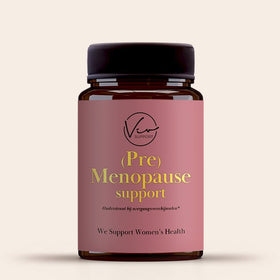
Support becomes increasingly important during this phase, really. Treat yourself. Are you in the early premenopausal phase? Then chasteberry and rhododendron are perfect for you to soothe menopausal symptoms. Are you a bit further along in the hormonal transition phase? Are you experiencing more cycle fluctuations? Then choose black cohosh and red clover.
Menopause test: get your FSH measured
Do you want to know if you are approaching menopause? Then you can consult a gynecologist and have your FSH (follicle-stimulating hormone) measured. This hormone begins to gradually rise approximately 10 years before menopause to stimulate impaired ovulation. FSH can help determine if you are approaching menopause (in which case the values will be elevated).
You might be wondering: is all that premenopausal stuff just part of it?!
Yes, that is the question. In any case, around this age it becomes increasingly important to look at your lifestyle and diet. All my advice revolves around that as well.
In summary: healthy, unprocessed food, enough exercise, not too much stress, and last but not least: good sleep. Those are the key ingredients. Then you have a much better starting point to cope with those hormonal changes. Because yes, those hormonal fluctuations are simply inevitable, one way or another.
Follow me on Instagram for inspiration and advice as well.
Love, Viv


