.svg?v=133333626955077491221771076156)



You are lying in bed, finally at rest. But instead of longing for your partner, you feel… nothing. No desire. No excitement. Perhaps even slight irritation at the thought of 'having to perform'. And this despite the fact that your partner isn't doing anything wrong, or that you yourself actually long for that connection. There is just one problem: your body isn't cooperating. You have little desire for sex and your libido is nowhere to be found. And you know what? You are not alone. Especially during busy times or after giving birth, your libido can be hard to find. What can you do to slowly reconnect with your sexual energy?
What cortisol has to do with a low sex drive
Stress is a natural reaction of the body to physical or mental pressure. This can be, for example, work pressure, a full mental to-do list, sleepless nights, or simply when life feels like 'too much'.
In stressful situations, your body produces the hormone cortisol – also known as the stress hormone . Cortisol helps the body switch to a state of alertness and readiness. Useful in the short term, but prolonged stress can affect the natural balance in the body.
Cortisol also plays a role in balancing other processes in your body, such as the female hormonal balance. For instance, there appears to be an interplay between cortisol and estrogen, whereby the body gives lower priority to reproductive processes during prolonged stress. Simply put: survival comes before reproduction.
Many women recognize that periods of prolonged stress go hand in hand with less room for relaxation, connection, and intimacy. Your mind is 'on,' your schedule is packed, and you find it difficult to unwind.
We are going to give you advice to experience a safe and secure feeling, and to be relaxed and present in your body.
Postpartum and little room for intimacy
You have just given birth. Your body is still recovering, your nights are short, your hormones are still raging, and then suddenly there is pressure again on the idea of 'having sex'. Perhaps from the outside, but perhaps also from within yourself. While everything in your system screams: “Not just yet!”
That makes perfect sense. In the first few months after giving birth, you are in recovery, and you are allowed to take the space for that. Intimacy and desire often return at a different pace than you were used to. Know that there is nothing wrong with you; your body is busy recovering, caring, and nourishing. You might notice at some point that you *do* long for connection again. At that point, small steps towards relaxation, self-care, and unwinding can make a big difference. Above all, see what feels right for *you*.
What helps to get the desire for sex back?
Sexual desire is not a switch you turn on. It arises when you experience relaxation, space, and connection. First with yourself, and then with your partner. It does not come from willpower, but from relaxation. Your nervous system must feel safe to open itself up to pleasure and closeness.
Below you will find loving, practical ways to support your body and mind when you notice that the desire has temporarily faded.
- Nutrition that supports your body
What you eat affects your energy levels, your mood, and your hormonal balance. Consider:
- Healthy fats (such as those from avocado, coconut, nuts, olive oil, and fatty fish) are building blocks for sex hormones.
- Ensure sufficient protein in your diet, because proteins also serve as building blocks for other hormones. Think of meat, fish, poultry, nuts, seeds, and fermented soy.
- Zinc-rich foods (such as pumpkin seeds, eggs, and legumes) are extremely important for your hormonal system.
- Complex carbohydrates (from vegetables, fruit, and oats) keep your blood sugar levels stable, which helps with mood and energy.
- Lifestyle and relaxation
Chronic stress can put the body into survival mode. As a result, your sexuality can take a back seat. What you can do:
- Make conscious time for self-care: a warm bath, massage, dance, or touch without a goal.
- Let your attention shift from your head to your body. Breathing exercises can help you move from 'on' to 'present' in your body. For example, breathe in for four counts and out for six counts to relax.
- Create an environment where you feel no expectations, but plenty of curiosity. Put on a playlist that moves you, or put on clothes that make you feel beautiful and soft. For yourself, mind you, not for anyone else!
- Movement that helps you feel your body again
When you have low energy or a desire for intimacy, intensive sports are often not what you need. It is not about performance, but about presence. Movement can help you get out of your head and reconnect with your body.
Gentle, body-oriented forms of movement:
- Yoga or Yin Yoga that focuses on slow postures and breathing.
- Moving freely or dancing to music without choreography, purely by feeling.
- Walking in nature slows down your pace, reduces stimuli, and brings peace.
- Pelvic-focused movement can also help; think of gentle stretching or pelvic floor activation (for example, lying down, in silence).
- Support from plant substances – Mucuna pruriens
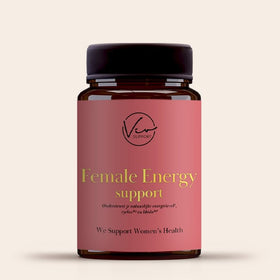
Mucuna pruriens (also known as velvet bean) is a plant that naturally contains L-Dopa – a direct precursor to dopamine , a neurotransmitter involved in motivation, pleasure, and reward. In herbal medicine, Mucuna pruriens is often associated with supporting your energy levels as well as your libido.
Finally
The desire for sex does not come from willpower, but from safety, gentleness, and allowing desire. Your body doesn't have to 'do' anything; it is allowed to feel. Give yourself permission to discover what works for you, without pressure, at your own pace. If you want to supplement with Mucuna pruriens, click here.


