.svg?v=133333626955077491221771076156)



When women ask me: “I only want to take one pill a day. Which pill should I take?” I immediately exclaim without hesitation: “Vitamin D!” Because it is truly essential. Why is this vitamin absolutely number 1 for me? That is because vitamin D is involved in so many processes in the body. Vitamin D deficiency makes you tired, susceptible to disease, osteoporosis, and muscle weakness, to name just a few things. In this blog, all the ins and outs of vitamin D.
A hormone-like substance
Vitamin D is one of the few vitamins that the body can produce itself. We produce vitamin D primarily under the influence of ultraviolet (UV) radiation from sunlight. For this reason, it might be better to call vitamin D a hormone-like substance. For humans, the most important forms are vitamin D2 and D3. Incidentally, vitamin D—just like other vitamins—is also present in small amounts in our diet. D2 is found in yeast, cheese, and certain mushrooms, and D3 is found in some foods of animal origin, such as fatty fish, eggs, and cod liver oil.
Vitamin D is a special substance that exerts its effect as soon as it is converted into its active form in your body: the hormone calcitriol. Vitamin D itself therefore has no hormonal activity, but it is an important component for the production of this hormone. Then you immediately understand why I consider vitamin D so incredibly important. As you know, I often say: everything revolves around our hormones! And that applies once again to this important substance! In this blog, by the way, we will continue to talk about vitamin D, and by that we mean the active form: calcitriol <1>.
Involved in virtually all processes
Vitamin D is involved in many processes in the body that are essential for good health. Many health claims are known about vitamin D – this means that these concern scientifically proven effects. The most important health claims are:
- Vitamin D ensures the maintenance of strong bones and teeth
- Vitamin D plays a role in the bone formation of children
- Vitamin D contributes to normal calcium levels in the blood.
- Vitamin D supports the body's immune system.
- Vitamin D helps the immune system
- Vitamin D is good for the muscles
- Vitamin D contributes to the production of cells and tissues.
As you can see above, the most important functions of vitamin D involve regulating calcium metabolism (for the attentive reader: the word 'calcium' is hidden in calcitriol). Vitamin D plays a role in bone mineralization (bone formation) by aiding in the absorption of the minerals calcium and phosphorus into the bones and teeth. Furthermore, vitamin D is responsible for muscle contraction, nerve impulse conduction, and – more generally speaking – the optimal functioning of all cells in your body. The fact that vitamin D receptors are present on more than thirty different types of cells and tissues suggests that vitamin D has a very broad scope of action. One might even wonder what vitamin D is not involved in <2>.
The role of our evolution and the sun's power
As mentioned, the sun is by far the most important source for vitamin D production. We are very capable of producing vitamin D in the skin under the influence of UV-B (ultraviolet) radiation from sunlight. It is not surprising that we produce the most vitamin D around the equator, because the sun's intensity is strongest there. That is, of course, quite different in our little country. And naturally, our evolution plays an important role here. We once lived as hunter-gatherers in Africa before moving into the rest of the world. Research shows that we do not even reach half of the values measured in our ancestors, the hunter-gatherers. To illustrate: hunter-gatherers had a vitamin D level of around 115 nmol/l <3>. Now we are often below 60 nmol/l. And that is really much too low to feel well.
The main reason our vitamin D status is in such a poor state is, of course, because we live here at a latitude with far fewer hours of sunshine than around the equator. In fact, the sun is only strong enough for vitamin D production between May and September. But even when it is sunny, we now live and work indoors much more. And if we do go outside, we are often covered in clothes and sunglasses. And when we go sunbathing, we do so safely by slathering ourselves with sunscreen from head to toe. Now, that is sensible in itself, of course, but it is probably also a good idea to expose yourself to the sun unprotected every now and then.
Why a vitamin D supplement?
We'll briefly list the reasons for you:
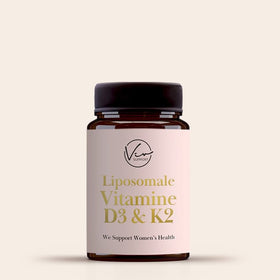
- We have too few hours of sunshine in the Netherlands, certainly from October to April.
- And even when the sun is shining, we often get (too) little sun exposure and usually use sunscreen and put on sunglasses.
- In the summer, you might be able to use a slightly lower dose than in the winter, but you must ensure that you spend 15 to 30 minutes in the sun unprotected every day. Of course, be careful not to get sunburned; that is not the intention. And the sun must have a UV index of at least 3 to be strong enough for vitamin D production (you can check the UV index on the KNMI website).
- For people with darker skin tones, the risk of deficiency is greater because they are less able to produce vitamin D in their skin.
- Are you over 60? The need for extra vitamin D increases with age, so keep that in mind.
- For pregnant women and women who are breastfeeding, there is an increased need to ensure an optimal vitamin D level in your unborn or newborn baby.
Are you curious about your vitamin D status? Then have your blood levels checked. The goal is a minimum of 80-100 mmol in your blood.
Choose a supplement in a fat matrix, because vitamin D is a fat-soluble substance that is not absorbed from your intestines into your blood without fat.
Finally: vitamin D3 is best taken with vitamin K2.
Sources:
(1): Holick, M. F. (2003). Vitamin D: A millennium perspective: Vitamin D. Journal of Cellular Biochemistry, 88(2), 296–307. https://doi.org/10.1002/jcb.10338
(2): https://www.naturafoundation.nl/kenniscentrum/monografie/57/vitamine-d
(3): Luxwolda, MF, Kuipers, RS, Kema, IP, van der Veer, E., Dijck-Brouwer, DAJ, & Muskiet, FAJ (2013). Vitamin D status indicators in indigenous populations in East Africa. European Journal of Nutrition, 52(3), 1115–1125. https://doi.org/10.1007/s00394-012-0421-6


