.svg?v=133333626955077491221771076156)


This is an information page. Viv Support has no products intended for this indication/application.
Menstrual complaints occur every month and can disrupt daily activities. Whether it involves severe menstrual pain, an irregular menstrual cycle, or other discomforts, many women experience discomfort during their period.
Fortunately, there are various ways to alleviate the symptoms and better understand the menstrual cycle.
What are menstrual symptoms?
Menstrual complaints refer to the physical and emotional discomforts that many women experience during their menstrual cycle. These complaints can range from mild to severe forms of pain and discomfort and can affect daily life. Some of the most common menstrual complaints are:
-
Severe menstrual pain: Cramps and pain in the lower abdomen that are often intense.
-
Heavy blood loss: More blood loss than normal, which can lead to fatigue.
-
Headache: Menstrual-related headaches are common.
-
Bloated feeling: This discomfort is often a symptom of the hormonal changes that occur during the menstrual cycle.
-
Mood swings (PMS): Irritability, mood swings, and even depressive feelings can occur before or during menstruation.
These symptoms are often caused by the hormonal fluctuations that occur during the menstrual cycle. Your hormones, such as estrogen and progesterone, influence how your body feels and functions and can lead to these discomforts.
Causes of menstrual complaints
There are various causes of menstrual complaints. The following discusses the most important factors that influence the menstrual cycle and the associated symptoms:
-
Hormonal changes: During the menstrual cycle, the balance of hormones such as estrogen and progesterone changes. These fluctuations can lead to severe menstrual symptoms, including painful periods and mood swings.
-
Endometriosis: In women with endometriosis, the uterine lining grows outside the uterus, which can cause severe pain, especially during menstruation.
-
Fibroids: These are benign growths in the uterus that can cause heavy bleeding and pain.
-
Premenstrual Syndrome (PMS): PMS occurs just before menstruation and causes a wide range of physical and emotional symptoms.
-
Polycystic Ovary Syndrome (PCOS): This hormonal condition can lead to irregular periods, which in turn can cause menstrual complaints.
Symptoms of menstrual complaints
The symptoms of menstrual complaints can vary from woman to woman. Some common symptoms of menstrual complaints are:
-
Menstrual pain (dysmenorrhea): This is often the most common complaint and can lead to severe pain in the lower abdomen and lower back, caused by the contraction of the uterus.
-
Heavy blood loss: This can range from an increased menstrual flow to leakage from sanitary pads or tampons. Heavy blood loss can lead to fatigue, dizziness, and even anemia.
-
Bloated feeling: This often occurs just before or during menstruation and can worsen the feeling of discomfort.
-
Headache: Many women experience headaches or migraines as a result of the hormonal changes that occur during menstruation.
- Mood swings: Pain, discomfort, and hormonal fluctuations can lead to emotional swings, which are often associated with PMS.
Want to read more about mood swings and how to reduce them? Click here.
How to relieve menstrual complaints?
There are various ways to relieve menstrual discomfort. Below are some useful tips to reduce menstrual discomfort:
-
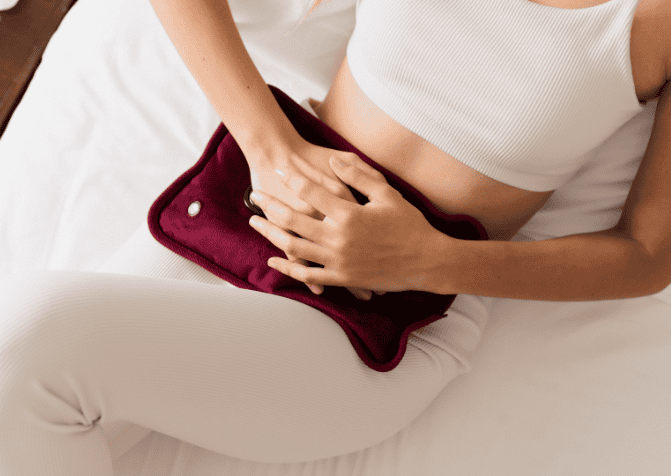
Heat: Using a heating pad or hot water bottle on the lower abdomen can alleviate the pain of menstrual cramps by relaxing the uterus.
-
Healthy diet: A healthy diet rich in vegetables, fruit, and fiber can help balance your hormones, which can reduce menstrual symptoms.
-
Exercise: Regular exercise helps improve blood circulation and can relieve menstrual pain.
-
Sufficient rest: Ensure you get enough sleep and give your body the chance to recover from menstruation.
When should you seek medical help?
Although menstrual complaints are normal, there are cases where you need medical help. Consult a doctor if:
-
Your period is heavy and you experience leakage from a sanitary pad or tampon within an hour.
-
The pain is not relieved with lifestyle changes or even gets worse.
-
Your periods are irregular or stop for extended periods without a clear cause.
-
You experience pain during or after sex , or pain when urinating.
In these cases, your doctor can investigate whether underlying medical conditions, such as endometriosis or fibroids, are present.
Trust in Viv Support
At Viv Support, we understand the impact that menstrual complaints can have on your daily life. We offer comprehensive support for women struggling with menstrual complaints, providing information and advice.
If you want more information about menstrual discomforts, click here .
Frequently asked questions about menstrual complaints
1. What can I do about severe menstrual pain?
Heat, such as a heating pad, can help relieve the pain. Physical exercise can also help reduce the symptoms.
2. How do I know if my menstrual symptoms are normal?
If your menstrual pain is severe, your menstrual blood loss is abnormal, or your menstrual cycles are irregular, it may help to consult a doctor. This also applies if you experience severe pain during sex or urination.
3. Can diet help relieve menstrual symptoms?
Yes, a healthy diet rich in fiber, fruits, and vegetables can balance your hormones and relieve menstrual symptoms. Also, avoid too much salt and caffeine, as these can worsen symptoms.


