.svg?v=133333626955077491221771076156)


This is an information page. Viv Support has no products intended for this indication/application.
Menopause painful joints: what happens to your muscles and joints?
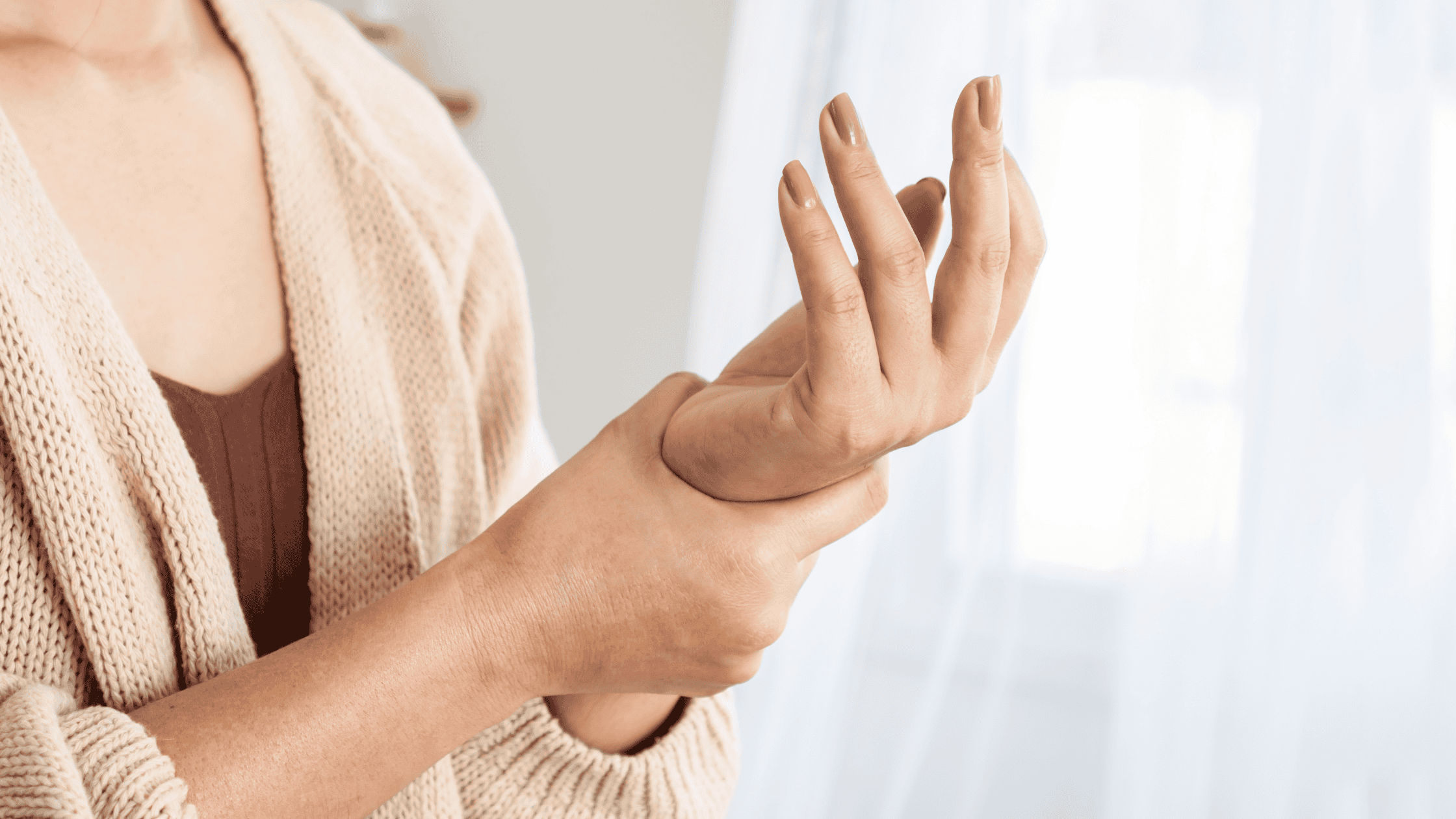
Do you feel stiff when getting up? Do you suffer from painful joints in your knees, shoulders, or elbows, even though you never complained about it before? Then you are not alone. Many women going through menopause experience stiff muscles and joints, sometimes so severely that climbing stairs or exercising becomes uncomfortable.
What changes in muscles and joints during menopause?
It is a common but overlooked phenomenon: painful joints during menopause. It feels like a creeping change that suddenly begins to have a major impact on your daily life. Fortunately, there is also good news: if you understand what is happening in your body, you can work more effectively towards relief.
Menopause is a phase in which your body slowly bids farewell to the fertile phase of life. Your estrogen levels drop, and this affects much more than just your menstruation or hot flashes. Your muscles and joints also undergo changes.
The role of estrogen in muscles and joints
The hormone estrogen supports joint lubrication, the maintenance of muscle mass, and the production of collagen in connective tissue. As soon as your estrogen levels drop:
- Does lubrication in joints decrease?
- Do tendons and ligaments become stiffer?
- Does the elasticity of the cartilage decrease?
- You lose muscle mass, which causes extra pressure on weight-bearing joints such as the knees
The result is joint pain, stiffness, and tenderness throughout the body. Painful muscles and joints during menopause are therefore a logical consequence of this hormonal shift.
Recognizing painful joints during menopause
Pain in muscles and joints manifests itself in various ways. One woman primarily feels morning stiffness, while another suffers from a constant nagging pain. Typical joint complaints during menopause:
- Pain or swelling in the knees, hips, shoulders, or elbows
- Stiffness after rest or early in the morning
- Tender tendons or muscle pain after light exertion
- Reduced mobility of the joints
- Symptoms that worsen with humidity or little movement
Please note: these symptoms can also resemble osteoarthritis, but are not necessarily the case. A doctor can provide clarity on this.
Why women going through menopause are more susceptible to pain
Under the influence of hormonal fluctuations, the sensitivity of the nervous system increases. As a result, our sensitivity to pain is heightened, even to stimuli that previously went barely unnoticed. Add to this the fact that dehydration, stress, or poor sleep also affect how we experience pain, and you understand why many women are particularly susceptible to muscle and joint pain.
You do not have to passively endure the perimenopause and menopause. There are various ways to support your muscles and joints during the transition and relieve pain.
1. Physical activity: more than just good for your figure
Movement is essential for maintaining muscle mass, blood circulation, and moisture in the joints. Consider:
- Walking or cycling (daily)
- Strength training at least twice a week
- Yoga or Pilates for flexibility and relaxation
Exercise not only helps your joints during menopause, but also has an anti-inflammatory effect and reduces stress.
2. Nutrition: building blocks for your skeleton and connective tissue
Proteins, vitamins, and minerals are essential for strong bones, tendons, and cartilage. Consider a balanced diet with whole grains, nuts, seeds, fatty fish, legumes, and vegetables.
3. Supplement with phytoestrogen-rich foods
Consider foods rich in phytoestrogens to supplement estrogens, such as fermented soy (tofu and tempeh, for example), flaxseed, sesame seeds, alfalfa, mung bean sprouts, and green tea. Small amounts of phytoestrogens can also be found in garlic, onions, broccoli, Brussels sprouts, pomegranates, berries, plums, cherries, peppermint, and sage.
When joint pain requires more attention
There are situations in which it is wise to seek medical advice. If your joint pain develops suddenly or worsens rapidly, or if noticeable swelling, redness, or warmth occurs. If your daily activities are severely hampered, it is advisable to contact a specialist.
It is especially important to remain vigilant if you have an increased risk of osteoporosis or if osteoarthritis runs in your family. A doctor can provide a definitive answer with a simple bone scan and blood test. Do not simply accept pain and discomfort; moreover, it is not always a consequence of menopause. A common problem during menopause is precisely that many symptoms are attributed to hormonal changes, which creates an environment for serious conditions to develop.
Frequently asked questions about painful joints during menopause
1. Are painful joints a normal phenomenon during menopause?
Yes. Due to the decrease in the hormone estrogen, the structure of tendons, cartilage, and muscles changes, causing joint pain to occur more frequently. Being overweight can also play a role, but it does not necessarily have to be the main cause.
2. What helps with painful muscles and joints during menopause?
Regular physical activity, sufficient protein, and a healthy lifestyle can provide relief. Symptoms often decrease when you regularly engage in light to moderate physical activity.
3. Can joint pain during menopause also indicate something more serious?
If the pain arises suddenly, is accompanied by swelling, or does not subside with rest, it is wise to seek medical advice. In some cases, it could also be osteoarthritis or an autoimmune disease. Our joints are constantly under strain; if you experience physical stress, it is important to address this immediately.
Do you want to better understand what your body needs during this phase? Contact a specialized therapist. So that you can move smoothly again, even during menopause.
Would you like more information about supporting painful joints? Then click here.


